Who am I and what do I offer?
My history
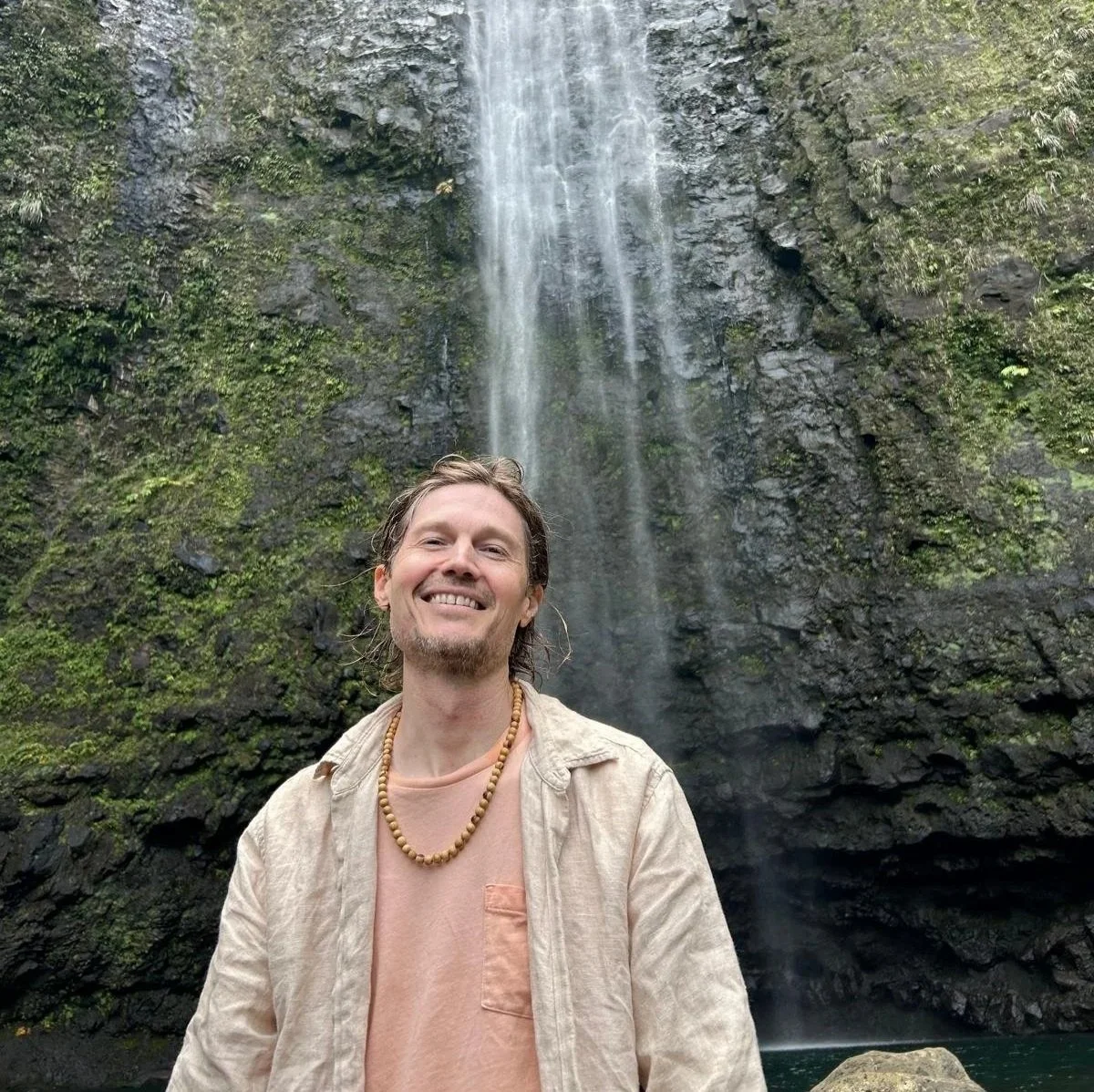
I am a warm, gentle, uplifting, and caring soul who has lived a full spectrum (both graceful and messy) human life, currently living in California .
From about age 11, I was obsessed with playing guitar and making music. I was on track to become a rock star (or at least make a living as a musician) until I developed severe tendinitis in my wrists and had to stop playing altogether. This shattered my world, but was the catalyst that set in motion a spiritual awakening that changed the course of the rest of my life! (and side note, thankfully my spiritual and emotional healing journey cured my tendonitis and I’m back to making music).
The life crisis was in full swing in 2001 when a series of synchronistic events led me to a profound spiritual awakening. It was a transcendent experience of my self as pure spirit—the open, expansive, peaceful, radiant consciousness that is the foundation of life. It was like suddenly noticing an inner light that is always on.
At the same time, I didn’t suddenly feel separate from my human life—I still had all of same emotions, thought patterns, habits, etc. This was a strange revelation—I am spirit and I am a particular human with all of the grace and mess that comes along with that.
Initially, I wanted to be just spirit and tried everything to transcend my messy human nature. And this was sort of possible when I was free of “distractions” on the meditation cushion of yoga mat. But when I was actually engaged in my life, it was clear that I was still a human with messy emotions and self-judgments that could trigger a lot of suffering if things weren’t going well with relationships, school/work, my health, etc.
Slowly over the past 25-ish years, I’ve learned what it means to live as the totality—spirit and human.
During this journey, I fell in love with meditation and other spiritual healing practices (sound healing, spiritual cleansing/protection, energy work). And ultimately, I discovered that spirit does not come and go—it is the divine presence within that is always here. That recognition blossomed through the teachings of Ramana Maharshi, Papaji, and spending time with my core spiritual teacher Gangaji (see spiritual lineage section below).
At the same time, I was obsessed with understanding my human nature. So I pursued a PhD in psychology and neuroscience (see academic history section below) and developed a deep understanding of how the mind works—our core needs as humans, how emotions are generated, how we form beliefs about ourselves and the world, why we choose certain goals and actions, and how habits are formed. It was through understanding my unmet needs, emotional trauma, and negative self-beliefs that I was able to work through the blocks that created the tendonitis. During my academic trajectory including my current job as a research scientist at Stanford, I have been lucky to work with and learn from world-renowned leaders in growth mindset, emotion regulation, attention, self-beliefs, clinical disorders, and spontaneous thought processes.
I have loved the process of integrating all sorts of spiritual and psychology/neuroscience wisdom and experiential techniques I have gathered along the way.
But perhaps the most profound realization is this—we don’t need to work tirelessly to find peace and fulfillment. We don’t need to earn it through arriving at some future version of ourself. All that is required is to embrace the totality of who we are in this moment.
Society, from all angles, promotes a lie that makes us miserable—that we are not enough now but we could be enough in the future. This fuels a seeking energy that brings us temporary relief/pleasure, but never fulfillment.
We don’t need to fix our human “failings”. Rather, we only need to learn how to embrace everything—the light and the “dark” of our experience.
It’s not that change and growth are bad. Far from it, that is the purpose of life. All that is problematic is waiting to be peaceful and fulfilled until some time in the future when we think we have changed enough. We don’t have to wait! Waiting is the problem.
And to be clear, I don’t say this from a place of having lived an easy life. I say this having lived a quite challenging life, including loss of loved ones, chronic illness, and having many deep negative beliefs about myself. So, I am proof that it is possible to embrace all of it and find the peaceful essence of ourselves that is always available.
How I show up for you in one-on-one sessions
My role within this play of life is to provide assistance to those who desire peace, stillness, clarity, and emotional intelligence, and are ready to break free from limitations including the “not good enough” belief.
I offer a warm space to feel seen and heard, and to gently examine any areas of yourself or your life situation that feel stuck, or out of alignment, or not good enough.
I love being there for people who are ready to face challenging emotions and beliefs—often the root of what causes us to struggle with life rather than flow with it naturally with creativity and purpose.
I listen deeply—not only to your words, but also to your emotions, beliefs, and the energy beneath them. This creates a supportive dynamic in which I reflect back your wholeness, so that it becomes easier to notice all of yourself—your inherent peaceful light and whatever surface thoughts or emotions my be stuck and causing distress.
In some ways, there is really only one objective, though it might be approached through different techniques: to fall deeper into your own presence—and to experience how solid, reliable, and deeply comforting it is, no matter what human experiences are occurring on the surface.

My Spiritual Lineage
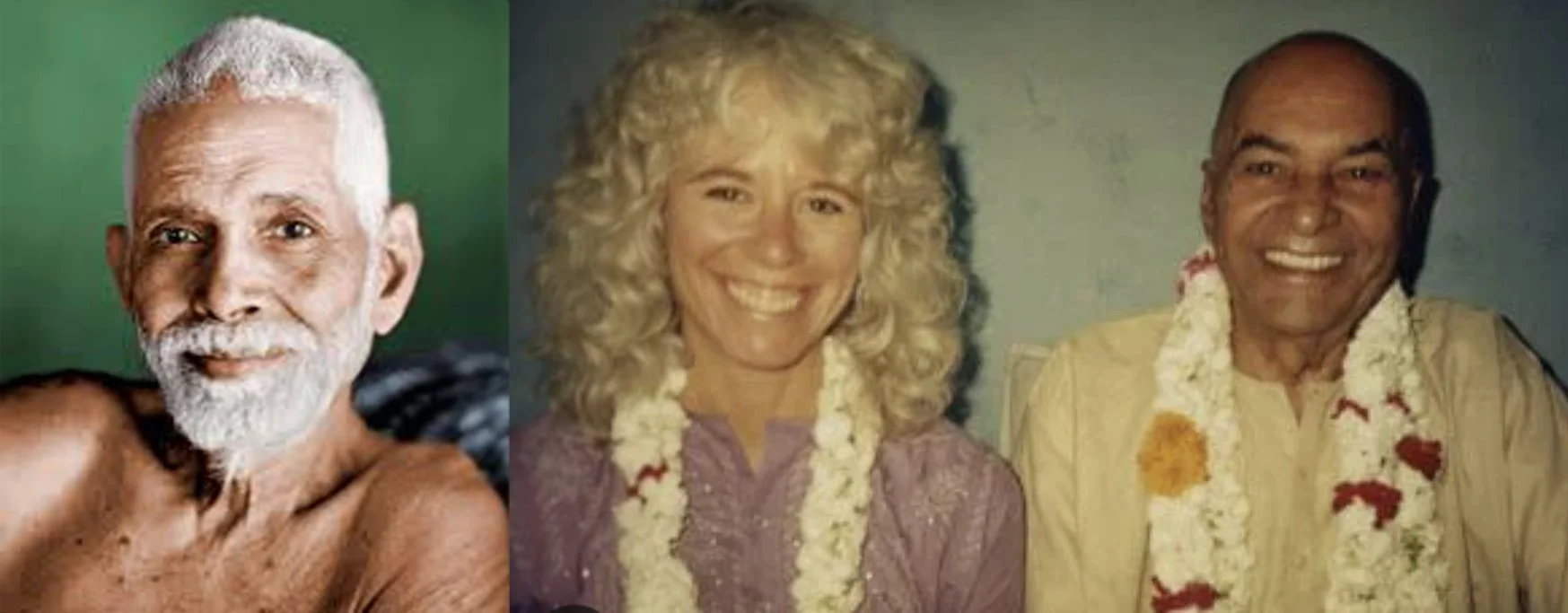
Very early on my spiritual journey, I was blessed to find a book by Ramana Maharshi—a great master of silence. I was then led to discover the writings of Papaji, and then Gangaji—my core spiritual teacher. I have loved every moment spent with Gangaji at many retreats since 2013.
Outside of this primary lineage, I have benefited tremendously from healing work, meditation practice, and intuitive work done with Qigong and Reiki masters.
I have also received amazing guidance and support from Buddha, Yeshua, Krishna, Quan Yin, Mary Magdalene, Archangels, Yogananda, among many others.
2006 Bachelor of Science (Psychology, University of Toronto)
2011 Master’s (Psychology/Neuroscience, University of British Columbia)
2017 PhD (Psychology/Neuroscience, University of British Columbia)
2017-2022 (Post Doctoral Fellow, Stanford University)
2022 - present (Research Scientist, Stanford University)
I have published over 30 peer-reviewed scientific articles on the psychology and neuroscience of emotions, strategies for regulating emotions, how meditation changes the brain, how self-beliefs impact mental health, etc.
For links to these papers, see: https://scholar.google.com/citations?user=Kkrvfe0AAAAJ&hl=en
My Academic History
Some of the scientific papers I have published:
Dixon, M. L., & Dweck, C. S. (2022). The amygdala and the prefrontal cortex: The co-construction of intelligent decision-making. Psychological Review, 129(6), 1414.
Fox, K. C., Nijeboer, S., Dixon, M. L., Floman, J. L., Ellamil, M., Rumak, S. P., ... & Christoff, K. (2014). Is meditation associated with altered brain structure? A systematic review and meta-analysis of morphometric neuroimaging in meditation practitioners. Neuroscience & Biobehavioral Reviews, 43, 48-73.
Fox, K. C. R., Zakarauskas, P., Dixon, M., Ellamil, M., & Thompson, E. (2012). Meditation Experience Predicts Introspective Accuracy. PLoS ONE, 7(9), e45370.
Dixon, M. L., Moodie, C. A., Goldin, P. R., Farb, N., Heimberg, R. G., & Gross, J. J. (2020). Emotion regulation in social anxiety disorder: reappraisal and acceptance of negative self-beliefs. Biological Psychiatry: CNNI, 5(1), 119-129.
Goldin, P. R., Thurston, M., Allende, S., Moodie, C., Dixon, M. L., Heimberg, R. G., & Gross, J. J. (2021). Evaluation of cognitive behavioral therapy vs mindfulness meditation in brain changes during reappraisal and acceptance among patients with social anxiety disorder: a randomized clinical trial. JAMA psychiatry, 78(10), 1134-1142.
Dixon, M. L., Thiruchselvam, R., Todd, R., & Christoff, K. (2017). Emotion and the prefrontal cortex: An integrative review. Psychological bulletin, 143(10), 1033.
Zhang, J. X., Dixon, M. L., Goldin, P. R., Spiegel, D., & Gross, J. J. (2023). The neural separability of emotion reactivity and regulation. Affective Science, 4(4), 617-629.
Kam, J. W., Wan-Sai-Cheong, L., Zuk, A. A. O., Mehta, A., Dixon, M. L., & Gross, J. J. (2024). A brief reappraisal intervention leads to durable affective benefits. Emotion, 24(7), 1676.